Dairy & Livestock Building Insulation
Freestall barns, calf hutches, and milking parlors need air sealing for both energy efficiency and animal welfare. Ag-Tite spray foam delivers 25-40% energy savings.
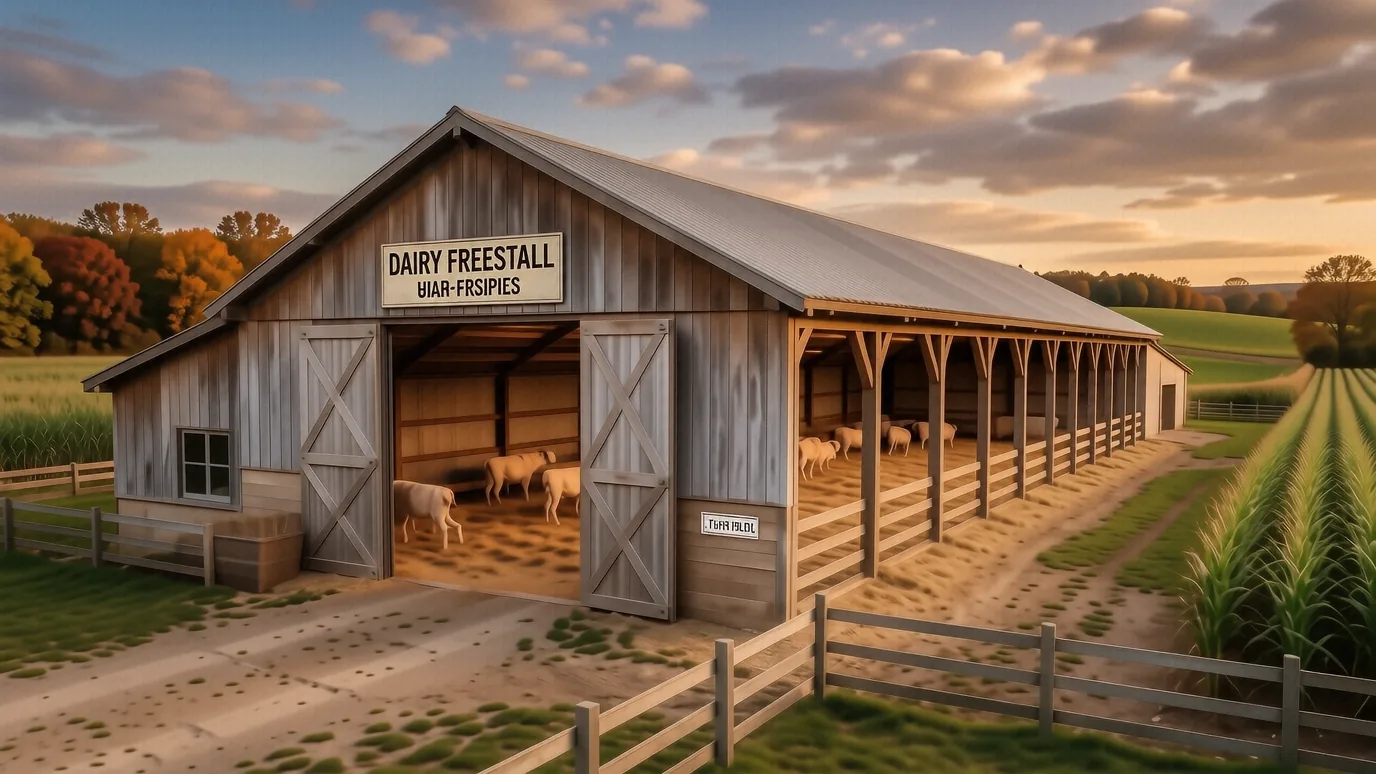
Dairy buildings have three conflicting goals
A dairy operation balances three things at once: animal welfare (which requires fresh air and stable temperature), feed conversion (which improves when animals burn fewer calories fighting cold or heat stress), and operating cost (which rises with every gap in the building envelope). The right insulation system reconciles all three. The wrong one, or no insulation at all, sets them in opposition.
Ag-Tite spray foam sealants close the cracks and joints that compromise temperature stability without sealing off the ventilation paths animals need. The hard, cured surface of AireBarrier Black also resists the moisture and bacteria buildup that plagues fiberglass batt insulation in livestock environments.
Documented results
The Auburn University poultry study showed 25-40% energy savings on properly sealed broiler barns. The thermal physics for dairy freestall barns and calf hutches is closely related. Same envelope problems, same chemistry solution, similar savings range. For Pennsylvania, Iowa, and Wisconsin operations (cold-climate dairy heartland), the payback typically runs 5-8 years before considering USDA REAP cost-share.
Building types we cover
- Freestall barns: long curtain-side structures, the standard for modern dairy. Air-seal joints, foam the gable ends.
- Calf hutches: the most thermally stressed buildings on a dairy. Insulation here pays back the fastest.
- Milking parlors: stainless steel plus concrete plus open ventilation, with specific moisture-control challenges. Ag-Tite handles the structural envelope; consult dairy-specific equipment for in-parlor air management.
Bio-based option for organic operations
For dairies with organic certification or organic-adjacent buyer requirements, our Soy Bio Sealant uses USDA BioPreferred soy-oil-based polyurethane chemistry. Same density, same Auburn-validated air-seal performance, now with renewable feedstock.
Air quality matters too
Insulation alone doesn’t fix indoor air quality in livestock environments. For the PM2.5 and ammonia filtration layer, see Livestock Air Quality, which covers the ventilation and filtration work that pairs with envelope sealing.
Grants and ROI
USDA REAP covers up to 50% of qualifying energy projects, including dairy envelope work. Average state awards are documented in our REAP Grant Estimator. For project-specific payback math, the ROI Calculator takes square footage, propane or natural-gas price, and climate zone to produce a binding-quality estimate range.