AG Sealant Platform For Poultry Farmers
Air leakage destroys poultry profitability. Drafts pull expensive heat out of broiler barns while moisture seeps into wood walls, creating breeding grounds for
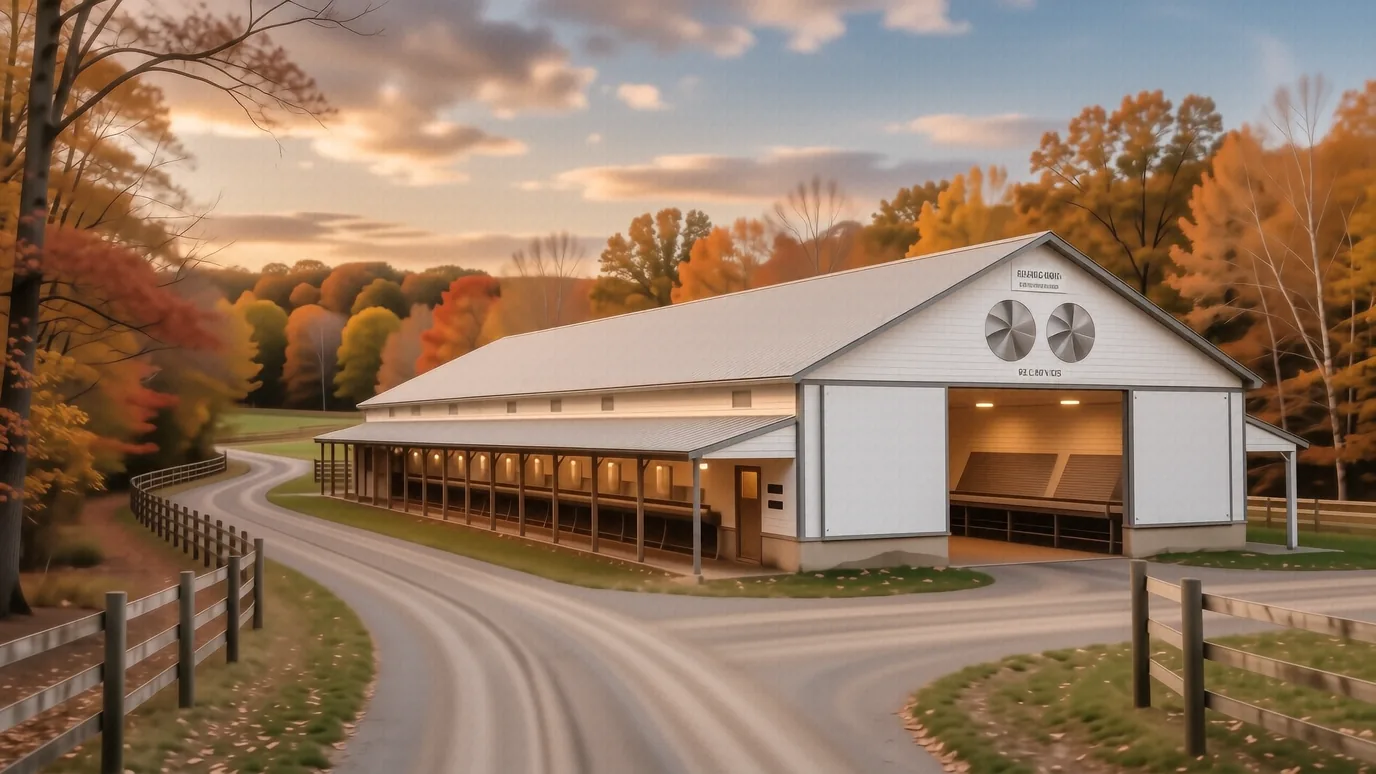
Tightening Poultry Houses for Energy Efficiency
Air leakage destroys poultry profitability. Drafts pull expensive heat out of broiler barns while moisture seeps into wood walls, creating breeding grounds for pathogens. Most farmers face a difficult choice when their buildings age: spend hundreds of thousands on new construction or struggle with rising utility bills in obsolete structures.
The Ag-Tite platform offers a third option. Since William Collins founded Sealant Technologies, Inc. in 2005, we have focused on providing high-density air sealing specifically for the agricultural industry. We do not sell general-purpose construction foams. Instead, our patented AireBarrier Black chemistry is engineered to withstand the unique thermal and biological stresses found in poultry environments.
Proven Energy Savings in Broiler Barns
Energy costs are a massive variable in your bottom line. If your heating system is fighting constant air infiltration, you are essentially burning money. We have seen this play out across thousands of broiler houses since our inception.
The data is concrete. An Auburn University study validated that sealing broiler barns with AireBarrier results in energy savings between 25% and 40%. One specific project involving a broiler barn achieved 35% propane savings after application. These numbers represent real money staying in the producer’s pocket rather than being lost through cracks in old siding or gaps in wall panels.
Efficiency is not just about heat. It is about control. When you seal the envelope, your climate control systems work exactly as designed. This stability reduces the mechanical strain on your heaters and fans.
Retrofitting Turkey Barns and Brooder Houses
Turkey farming requires different environmental precision than broiler production. Many turkey barns remain structurally sound but are energy obsolete. If you plan to operate these buildings for another 5 to 10 years, a full rebuild is rarely the smartest financial move.
Tightening up an existing barn with our air barrier program stops air and moisture from infiltrating the structure. This process transforms an old building into a high-performance environment. One brooder house project saw a 25% reduction in propane usage following our application.
We use specialized equipment to ensure these results are repeatable. Our SprayPod 2.0 allows for rapid, professional-grade application that handles the scale of large poultry complexes. It is fast. It is efficient.
Biosecurity and Wall Integrity
Biosecurity is a non-negotiable requirement in modern poultry production. Old walls made of plywood or OSB are problematic because they absorb moisture. This moisture creates pockets where bacteria, such as Salmonella, can thrive.
Our sealant provides a hard shell finish that adheres to almost any surface. Whether you are dealing with concrete, wood, metal, or plastic, the material sticks. This creates a continuous barrier that is easy to clean. By sealing the pores of old OSB or plywood, you eliminate the damp hiding spots that compromise your biosecurity protocols.
In one specific pullet house application, we completed the entire project in a single day using the SprayPod 2.0. The result was a seamless, washable surface that protects both the birds and the building’s structural integrity. For those concerned about organic materials, our Soy Bio Sealant offers an alternative approach to sealing.
Technical Specifications and Durability
Not all spray foams are created equal. Many competing polyurethane products on the market lack the density required for agricultural environments. Auburn University tested our material and found it reaches a density of approximately 1.5 lb/ft³. This is twice the density of many common competitors.
High density matters for longevity. Because the material is so dense, it resists the crushing forces and environmental shifts typical in poultry houses. It stays in place. Our AireBarrier White and Black options are designed to remain stable for the life of the building.
We also prioritize safety and compliance. Ag-Tite is the only agricultural sealant tested to meet ASTM E-84 fire standards. This provides peace of mind that your retrofit meets rigorous safety requirements.
Financing Your Retrofit with USDA REAP
Upgrading your facility requires capital. However, you may not have to shoulder the entire cost alone. The USDA offers the Rural Energy for America Program (REAP) to help agricultural producers implement energy-efficient improvements.
This program can provide up to a 50% cost-share for eligible projects. Because our sealing solutions directly reduce energy consumption, they are often ideal candidates for REAP funding. We recommend monitoring the application windows, which typically fall on March 31, June 30, and September 30.
You can use our REAP grant estimator to begin planning your project budget. Understanding these incentives early can make the difference between a deferred maintenance project and an immediate upgrade.
Comparing Sealants and Foams
Farmers often ask if they should use traditional spray foam or our specialized sealants. While standard spray foams expand significantly, they often lack the density and adhesion needed for high-moisture poultry environments.
Standard foams can be difficult to clean and may not provide a continuous air barrier in older, irregular structures. Our technology focuses on creating a tight, high-density skin that acts as both an insulator and a biosecurity shield. You can read more about the technical differences in our foam vs. sealants guide.
The goal is long-term ROI. A quick fix might save money today, but it will not stop air infiltration or moisture damage five years from now. We build for the long haul.
Calculating Your Return on Investment
Every poultry complex has different variables, including building age, local utility rates, and bird density. Because of these variables, we do not promise a single “magic number” for savings. Instead, we provide the tools to help you find your specific ROI.
Use our ROI calculator to input your current energy expenditures. By comparing your current propane or electric costs against the projected 25% to 40% savings identified in university studies, you can see how quickly the system pays for itself. Most complexes find that the program pays for itself within a very short period of operation.
If you are ready to evaluate your facility, contact us to discuss a custom program for your complex.
FAQ
How much coverage does one gallon of AireBarrier provide?
At a thickness of 1 inch, AireBarrier yields approximately 16 board-feet per gallon. If you are using a 24 oz can for smaller repairs, it will cover roughly 3,000 linear feet at a 1/4 inch bead.
Can this sealant be used on any surface?
Yes. The Ag-Tite chemistry is designed to adhere to concrete, wood, metals, and plastics. This makes it ideal for retrofitting older barns with mixed material walls like OSB or plywood.
Is the sealant fire-rated?
Yes. Ag-Tite is the only agricultural sealant tested to meet ASTM E-84 standards, ensuring it meets high-level fire safety requirements for agricultural buildings.
How do I apply large amounts of sealant quickly?
For large-scale poultry operations, we recommend using the SprayPod 2.0 equipment. This portable system allows for rapid application across large surface areas, which is much faster than manual application with cans.