Metal Building Insulation: New Build vs Retrofit
Metal buildings act like giant radiators. They heat up rapidly under the sun and lose warmth instantly when the wind picks up.
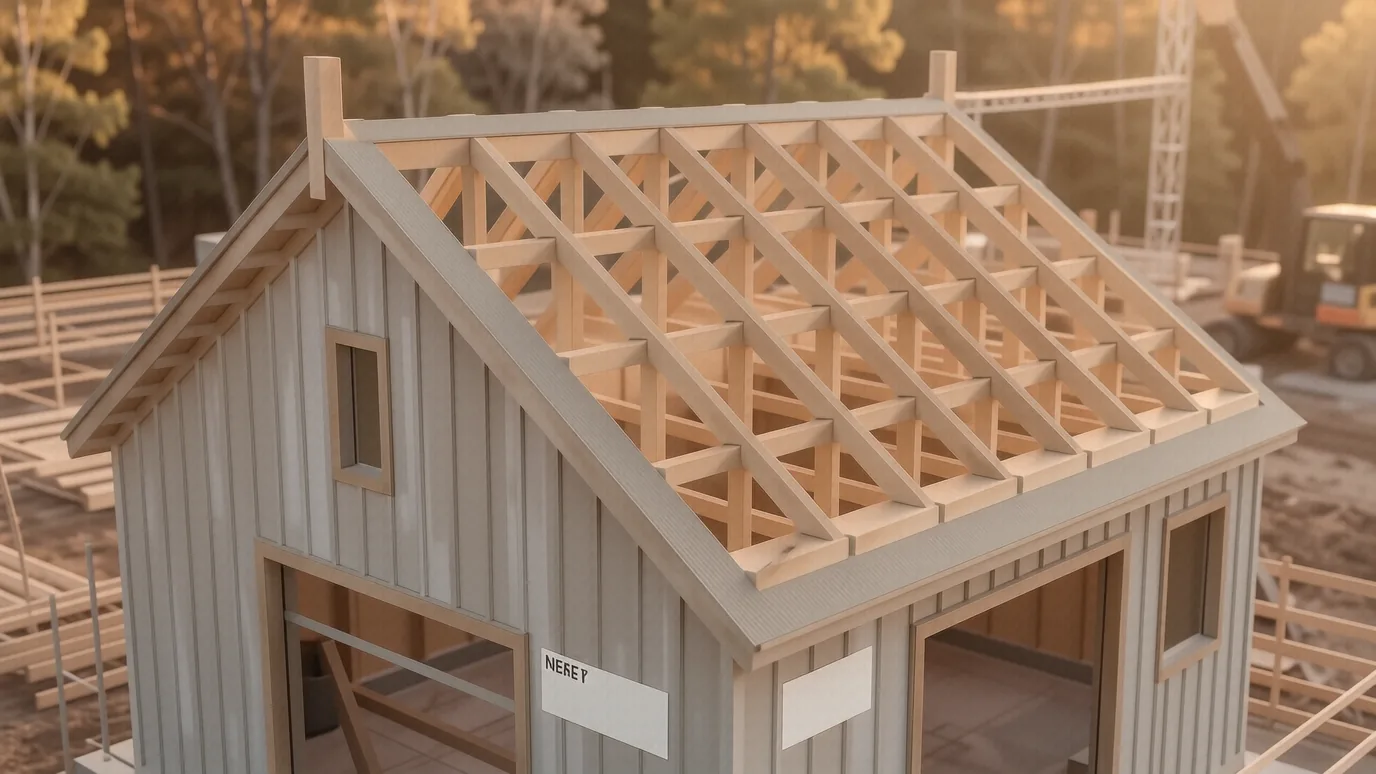
The Cost of Air Leaks in Metal Buildings
Metal buildings act like giant radiators. They heat up rapidly under the sun and lose warmth instantly when the wind picks up. Most builders assume that standard fiberglass batts or thin radiant barriers solve this problem. These materials often fail because they do not stop air movement. A building with high air infiltration loses energy regardless of how much insulation sits in the rafters.
You must decide between sealing a new structure during the framing stage or retrofitting an existing shell. This choice dictates your long-term utility bills and pest control success.
Comparing New Construction and Retrofit Strategies
New builds allow for integrated sealing. You can apply AireBarrier Black directly to the metal skin or framing before the interior finishes go up. This creates a continuous air barrier. Retrofitting requires working around existing equipment, birds, and dust. It is more labor-intensive but often provides a higher return on investment for older, leaking barns.
| Feature | New Build Integration | Existing Building Retrofit |
|---|---|---|
| Primary Goal | Prevent initial air infiltration | Seal existing leaks and cracks |
| Labor Intensity | Low (integrated into schedule) | High (requires cleaning/prep) |
| Material Access | Full access to all seams | Restricted by equipment/fixtures |
| Typical Coverage | 100% of new envelope | Targeted at high-leak areas |
| Energy Impact | Baseline efficiency established | Rapidly improves old efficiency |
Choosing the right path depends on your timeline. New construction is about prevention. Retrofitting is about remediation.
When New Construction Wins
New builds offer the lowest cost per square foot for air sealing. Because the structure is open, contractors can spray Soy Bio Sealant or AireBarrier into every corner without moving heavy machinery. You avoid the “hidden leak” problem because you seal the building before it ever sees a flock or a herd.
The Auburn University poultry study proved that sealing broiler barns with AireBarrier results in 25-40% energy savings. In a new build, you can achieve these numbers more reliably. The density of our applied sealant reaches ~1.5 lb/ft³, which is twice the density of competing polyurethane products. This thickness ensures the seal stays intact for decades.
New builds also simplify pest management. A sealed building prevents darkling beetles and rodents from finding entry points through metal seams.
When Retrofitting Wins
Retrofitting wins when your current utility bills are out of control. Older buildings often suffer from “thermal bridging,” where heat transfers directly through the metal studs and skin. You do not need to tear the building down to fix this.
A retrofit focuses on high-leakage zones like door frames, ridge vents, and wall junctions. Using a SprayPod 2.0 allows a single operator to move through a large facility quickly. You can target the specific areas where air is whistling through.
Retrofits are also vital for meeting modern environmental standards. If you want to apply for a USDA REAP grant, upgrading an old building’s efficiency is often easier to justify than a brand-new build. These grants offer up to 50% cost-share. Application windows typically close on March 31, June 30, and September 30.
The Decision Framework
Do not guess your strategy. Use these three metrics to decide your next move.
1. Thermal Leakage Audit
Walk the perimeter during a windy day. If you feel drafts near the floor or ceiling, you need a retrofit. If the building is new and already feels drafty, your original insulation installation was likely flawed.
2. Operational Downtime
Retrofitting requires cleaning the surfaces first. You cannot spray sealant over heavy dust or manure. If you cannot afford to empty a barn for three days, plan your retrofit during the off-season. New builds have zero impact on current production.
3. Budget vs. Longevity
New construction is a one-time capital expense. Retrofitting is an operational upgrade. Calculate the cost of energy wasted over five years. Often, the retrofit pays for itself in under 24 months through reduced heating and cooling costs.
Product Selection and Application Logic
For new builds, we recommend a full-envelope application. Use AireBarrier to create a monolithic skin. This prevents the “chimney effect” where air rises through the center of the building and escapes through the ridge. One 16 lb canister is equivalent to approximately ten 24 oz cans, making it efficient for large-scale new projects.
Retrofits require more precision. Use the 24 oz cans for detailed work around electrical boxes or small cracks. A single can yields about 3,000 linear feet of a 1/4″ bead. This allows you to seal many small gaps without wasting material.
Always ensure your sealant meets safety standards. Ag-Tite is the only agricultural sealant tested to ASTM E-84 for fire safety. This is critical in metal buildings where fire spread can be rapid.
Real Numbers: Coverage and Yield
Understanding yield prevents mid-project shortages.
- AireBarrier Yield: ~16 board-feet per gallon at 1″ thickness.
- Precision Sealing: A 24 oz can covers roughly 3,000 linear feet of a 1/4″ bead.
- Bulk Efficiency: The 16 lb canister provides the volume needed for large wall sections or long roof lines.
If you are retrofitting a 10,000 sq. ft. poultry house, do not buy small cans. Use the SprayPod system to maintain consistent thickness and coverage.
Check our product guide to calculate your specific volume requirements based on total linear footage of seams.
FAQ
Does metal building insulation stop pests?
Insulation alone does not stop pests, but an air barrier does. By sealing the gaps in the metal skin with AireBarrier, you prevent insects like darkling beetles from entering. A 2005 University of Georgia newsletter confirmed that sealing reduces pest penetration.
Can I apply sealant over old, dusty metal?
No. You must clean the surface before application. Any dust or debris will prevent the sealant from bonding to the metal. For retrofits, plan for a cleaning phase before the spraying begins.
How much can I save with a USDA REAP grant?
The USDA REAP program provides up to 50% cost-share for energy efficiency improvements. This includes upgrading your insulation and air sealing. Remember that application windows are March 31, June 30, and September 30.
Is the sealant fire-rated for agricultural use?
Yes. Ag-Tite is the only agricultural sealant tested to meet ASTM E-84 standards. This provides a necessary layer of safety in high-risk environments like poultry or swine barns.