Farrowing House Air Sealing and Biosecurity
Drafty farrowing houses kill piglets and waste electricity. When air leaks through wall cavities or ceiling joints, you lose the precise temperature control required
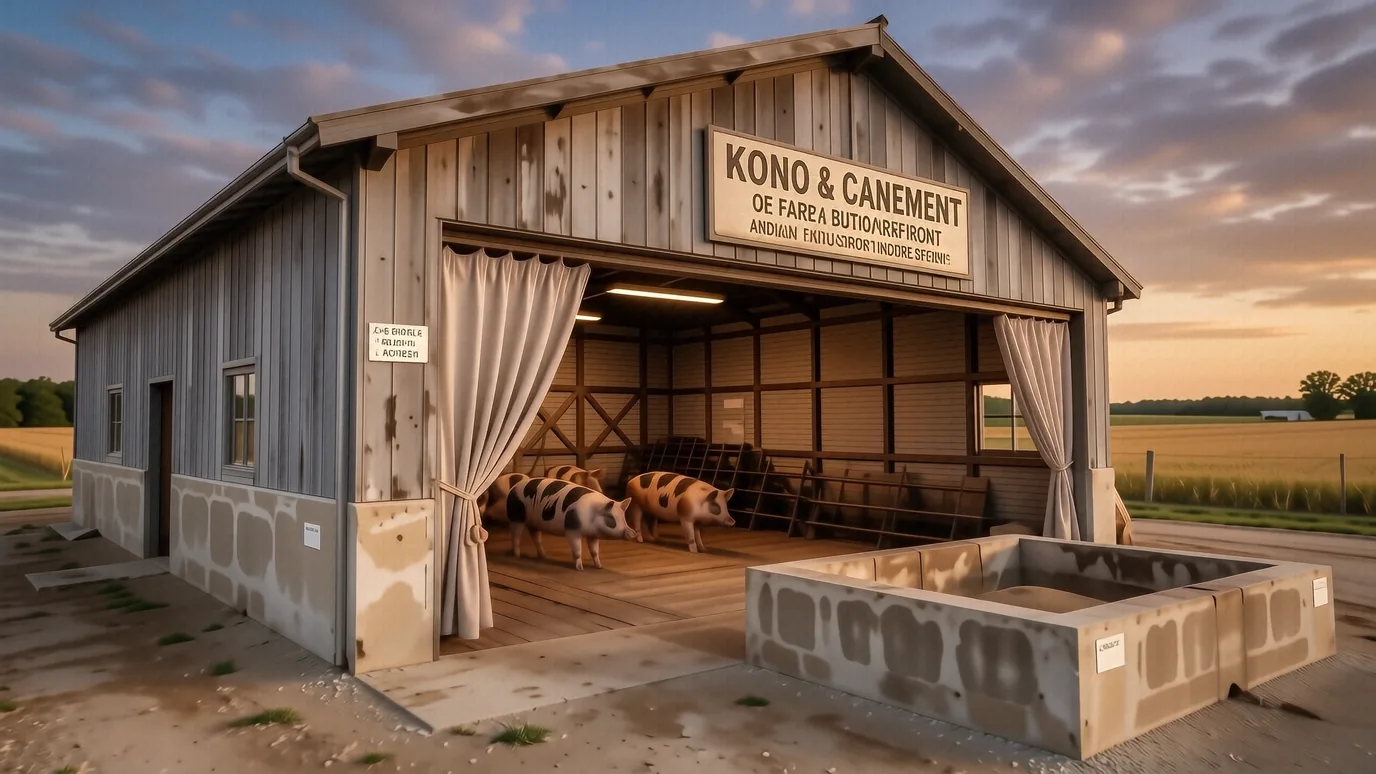
The Hidden Cost of Drafts in Farrowing Houses
Drafty farrowing houses kill piglets and waste electricity. When air leaks through wall cavities or ceiling joints, you lose the precise temperature control required for neonatal survival. This thermal instability forces heating systems to run harder while leaving cold spots in the room. A properly sealed building stabilizes the microclimate.
Standard insulation materials often fail because they do not stop air movement. Fiberglass batts might slow heat transfer, but they allow wind to blow right through them. You need a way to stop the air itself.
Why Farrowing House Insulation Requires an Air Barrier
Farrowing houses demand tighter environmental control than finisher barns. Piglets cannot regulate their body temperature effectively during the first days of life. If cold air leaks in, they huddle together, which leads to crushing injuries and increased mortality.
Air leakage also creates a biosecurity vulnerability. A November 2005 University of Georgia newsletter detailed how darkling beetles use small air gaps to penetrate building envelopes. These pests carry pathogens directly into your most sensitive production areas. Sealing these gaps with AireBarrier Black stops both drafts and insects.
Energy costs fluctuate wildly based on seasonal weather. Because unsealed buildings lose heat through convection, your electric or gas bills will spike during winter months.
Using a dedicated air sealant ensures that the thermal envelope remains intact. This is different from traditional soy bio sealant applications used for organic requirements, though both focus on airtightness.
The Ag-Tite Solution for Swine Facilities
We recommend a combination of AireBarrier products applied via the SprayPod 2.0 system. This equipment allows contractors to apply high-density sealant directly into cracks, crevices, and wall junctions. Unlike low-density foams, our material maintains a density of ~1.5 lb/ft³.
This density is twice that of many competing polyurethane products on the market. High density means the seal stays put under pressure changes. It won’t shrink or pull away from the substrate over time.
The application process targets specific leak points. We focus on electrical penetrations, plumbing entries, and the junction where walls meet the ceiling.
A single 24 oz can provides ~3,000 linear feet of a 1/4″ bead. For larger projects, our 16 lb canisters offer the equivalent of roughly 10 cans for faster coverage.
Application Methods and Best Practices
Contractors should first perform a visual inspection to identify major air paths. Often, these are found around ventilation fans and feeder lines. Once identified, the SprayPod 2.0 delivers the sealant precisely where it is needed.
Do not attempt to spray thick layers over large holes in one pass. Instead, apply multiple thin beads to ensure deep penetration into the substrate. This method prevents the material from sagging or creating voids.
Proper surface preparation is mandatory for a lasting seal. Dust and grease will prevent the chemistry from bonding to the concrete or metal.
Clean every surface before you start spraying. If the surface is dirty, the sealant will eventually peel away.
Calculating Your Return on Investment
The ROI on farrowing house insulation comes from two directions: lower utility bills and improved piglet survival. An Auburn University study validated that sealing broiler barns with AireBarrier resulted in 25-40% energy savings. We see similar trends in swine confinement when the thermal envelope is stabilized.
In Iowa, where winter heating loads are extreme, the payback period often occurs within two growing seasons. In warmer regions like Georgia, the savings come from reduced cooling loads during summer months.
You can offset much of the initial installation cost through federal programs. The USDA REAP grant provides up to 50% cost-share for energy efficiency improvements. Application windows typically close on March 31, June 30, and September 30.
Check your local utility rebates as well. Many cooperatives offer incentives for sealing air leaks in commercial agricultural buildings.
Common Mistakes in Swine Building Sealing
Many producers try to use cheap caulk to seal large gaps. Standard hardware store caulk dries out, cracks, and loses its seal within a year. It cannot handle the vibration of ventilation fans or the expansion of metal walls.
Another error is ignoring the ceiling. Most people focus on the floor and walls but forget that heat rises through unsealed roof penetrations.
Don’t overlook the importance of fire safety. We use the only agricultural sealant tested to ASTM E-84 standards. Using non-rated materials in a confinement building increases your risk during an electrical fire.
Finally, avoid “spot sealing” without a plan. If you seal one hole but leave ten others, the air will simply find a new path. You must treat the building as a single continuous envelope.
What to Ask When Requesting a Quote
When you call a contractor for a quote, do not just ask for a price per foot. You need specific technical details to ensure they are qualified. Ask if they use professional-grade equipment like the SprayPod 2.0.
Ask about the density of the product they intend to use. If they cannot tell you the lb/ft³ rating, they are likely using standard low-density foam.
Request proof of fire ratings for the material. Every swine barn should be sealed with materials that meet ASTM E-84 requirements.
Inquire about their experience with biosecurity sealing. A contractor who understands pest penetration will seal differently than a residential insulation worker.
Ask for a breakdown of coverage. Knowing how many linear feet they can cover per canister helps you verify the accuracy of their bid.
FAQ
How long does the sealant last in a farrowing house?
Our patented chemistry is designed to remain stable under the humidity and temperature fluctuations common in swine facilities. Unlike standard foams, it does not shrink or pull away from metal or concrete over time.
Can I apply this while animals are in the building?
Application should be coordinated with your production cycle. While our products are designed for agricultural use, you should consult with your veterinarian regarding any chemical applications near live animals to ensure total peace of mind.
Does this help with insect control?
Yes. By sealing the small gaps and penetrations that pests like darkling beetles use to enter, you create a much stronger biosecurity barrier.
Is there financial assistance available for sealing my barn?
The USDA REAP grant is a primary source of funding, offering up to 50% cost-share. You must apply during the specific windows ending March 31, June 30, or September 30.
For more information on improving your facility’s efficiency, check out our guide on energy savings in poultry barns.