USDA REAP Grant for Spray Foam in Alabama
High energy bills drain poultry and swine profits every month. Most producers assume that upgrading insulation is too expensive for their current cash flow.
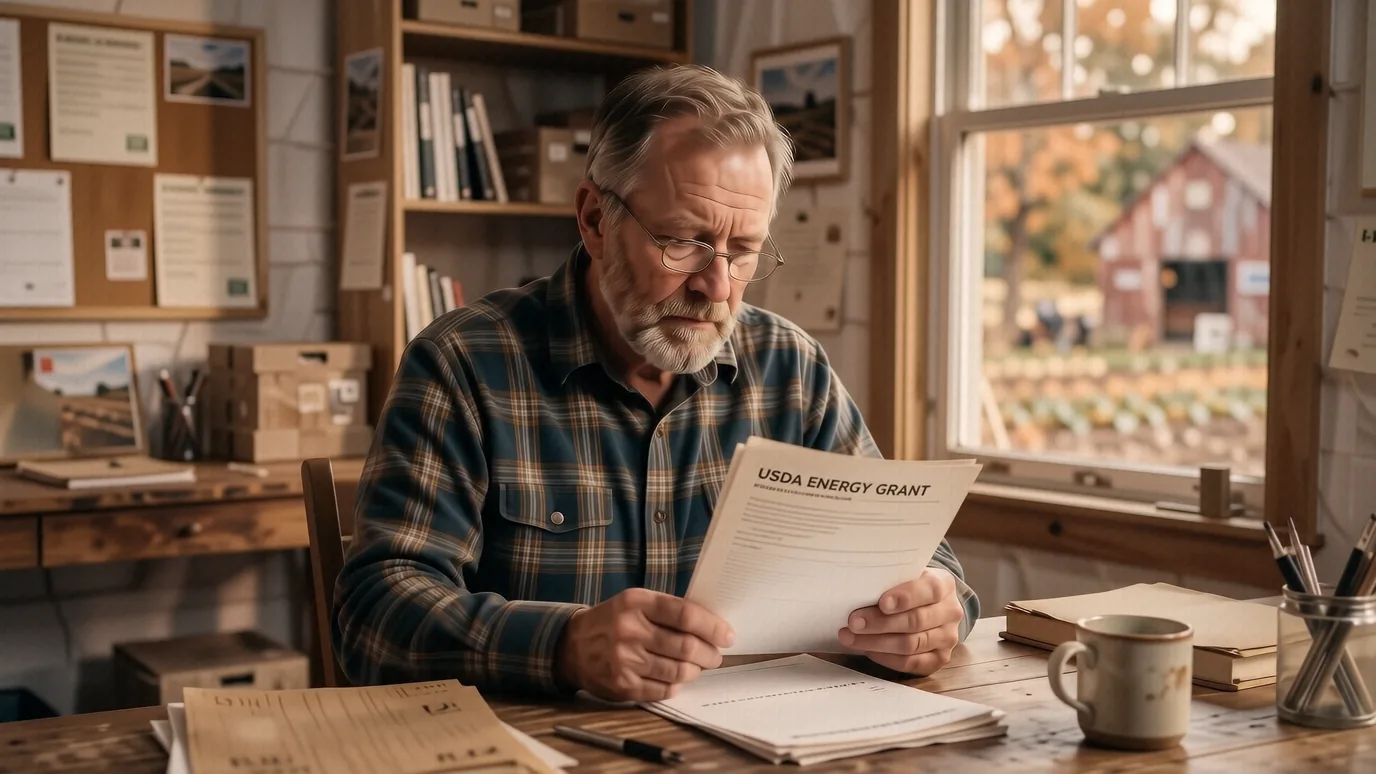
Funding Your Barn Air Sealing in Alabama
High energy bills drain poultry and swine profits every month. Most producers assume that upgrading insulation is too expensive for their current cash flow. The USDA Rural Energy for America Program (REAP) changes that math by providing direct financial assistance to agricultural producers. This grant helps offset the cost of high-performance sealants like AireBarrier to stop air leakage before it costs you money.
Alabama farmers can access significant capital through this federal program. It is not a loan. You receive funds to cover project expenses that improve energy efficiency or renewable energy production.
Understanding the REAP Grant Alabama Landscape
The USDA manages REAP specifically for rural businesses and agricultural producers. In Alabama, these funds target small-to-medium operations that lack the massive capital reserves of large integrators. The program offers two distinct paths: a grant for energy efficiency improvements and a loan for renewable energy systems. Most insulation projects fall under the energy efficiency category.
Application windows are critical. You must submit your paperwork before the USDA closes the cycle, which typically happens on March 31, June 30, and September 30. Missing these dates means waiting another three months.
Success depends on documentation. If you cannot prove exactly how much energy you will save, the USDA will deny your request. We recommend using data from the Auburn University poultry study, which validated 25-40% energy savings in broiler barns when properly sealed.
Eligibility for Spray Foam and Sealant Projects
Not every insulation product qualifies for REAP funding. The USDA requires evidence that the technology provides a measurable reduction in energy consumption. Traditional fiberglass batts often fail this test because they do not stop air infiltration. Air leakage is the primary driver of heat loss in Alabama’s humid climate.
Soy Bio Sealant and other airtight sealants are ideal candidates for these applications. Because these products create a continuous air barrier, they address the root cause of energy waste. The USDA looks for projects that move beyond simple thermal resistance to include true air sealing.
Your operation must meet two basic criteria:
- You must be an agricultural producer or a rural small business.
- Your facility must be located in an area with a population under 50,000.
Most Alabama poultry houses and swine barns easily meet these requirements.
Step-by-Step Application Process
Applying for a REAP grant requires more than just filling out a form. It is a technical process that demands precision. You should start by contacting your local USDA Rural Development office in Alabama to confirm current funding availability.
First, conduct an energy audit. This audit identifies exactly where your barn is losing conditioned air. A professional contractor can use this data to create a project scope that includes SprayPod 2.0 application for large-scale sealing.
Second, gather your financial statements. The USDA needs to see your farm’s tax returns and proof of ownership. They want to ensure the business is stable enough to complete the project.
Third, prepare the technical energy savings estimate. This is where many producers fail. You cannot simply guess that you will save money; you must use engineering-based calculations or validated studies to prove it.
Finally, submit the application through the official USDA portal. Keep copies of everything. If the agency asks for clarification on your sealant density or coverage, you need to respond quickly to stay in the running.
Project Scopes That Win Funding
The USDA prefers projects with a high “return on energy invested.” A project that seals every crack in a massive poultry house is more attractive than a small, isolated repair. We have seen the best results when producers focus on total building envelope integrity.
A winning scope often includes:
- Sealing all penetrations around electrical and plumbing lines.
- Applying airtight sealants to the seams of metal buildings.
- Addressing air leaks in door frames and ventilation louvers.
Small projects might get ignored. Focus on comprehensive solutions that address the entire structure’s efficiency.
Using high-density materials also helps your case. For example, our Auburn-tested density of ~1.5 lb/ft³ is twice as heavy as many competing polyurethane products. This level of substance provides the physical proof of quality that grant reviewers look for during technical reviews.
Stacking REAP with EQIP and State Programs
You do not have to rely on a single source of funding. Many Alabama producers “stack” REAP with other programs to cover nearly the entire cost of an upgrade. This strategy maximizes your available capital.
The Environmental Quality Incentives Program (EQIP), managed by the NRCS, is a common partner for REAP. While REAP focuses on energy, EQIP often focuses on resource conservation and environmental stewardship. If your sealing project also helps manage moisture or reduces chemical runoff, you might qualify for both.
State-level incentives in Alabama can also provide additional support. Always ask your local extension agent about specific poultry or swine industry grants that might supplement federal funds. Combining these programs can sometimes reduce a producer’s out-of-pocket cost to nearly zero.
Managing Project Costs and Implementation
Budgeting for an insulation project requires knowing your material coverage rates. For instance, one 24 oz can of sealant provides approximately 3,000 linear feet of a 1/4″ bead. If you are calculating the cost for a large barn, use these specific numbers rather than estimates.
A 16 lb canister is roughly equivalent to 10 of those 24 oz cans. Knowing these conversions helps you build an accurate bid for your grant application. An inaccurate bid leads to budget shortfalls mid-project.
Once the grant is approved, timing is everything. You must complete the work according to the timeline specified in your award letter. If the project drags on past the deadline, the USDA may reclaim the funds.
Work with contractors who understand agricultural requirements. They should be familiar with ASTM E-84 fire testing standards, as this ensures your building remains compliant with local safety codes while being energy efficient.
FAQ
How much can I get from a REAP grant in Alabama?
The USDA can provide up to 50% cost-share for energy efficiency projects. The total amount depends on the available funding in your specific USDA district and the scale of your project.
Does my sealant have to be a specific type to qualify?
The sealant must demonstrate a measurable reduction in energy use. Products that create an airtight barrier, such as AireBarrier, are highly effective because they stop air infiltration rather than just providing thermal resistance.
Can I apply for REAP if I am not a farmer?
You can apply if you operate a rural small business. However, the requirements and documentation may differ slightly from those required for agricultural producers.
What happens if my grant application is denied?
A denial is often due to insufficient energy savings data or incomplete financial records. You can reapply during the next window, typically on March 31, June 30, or September 30, provided you address the reasons for the initial rejection.
How long does the approval process take?
The USDA review process can take several months after the application window closes. It is best to plan your project at least six to nine months in advance of when you want the work completed.