USDA REAP Grant for Spray Foam in Georgia
Leaking air destroys poultry house profitability. When heat escapes through unsealed wall cavities or gaps in the building envelope, your heaters work harder to
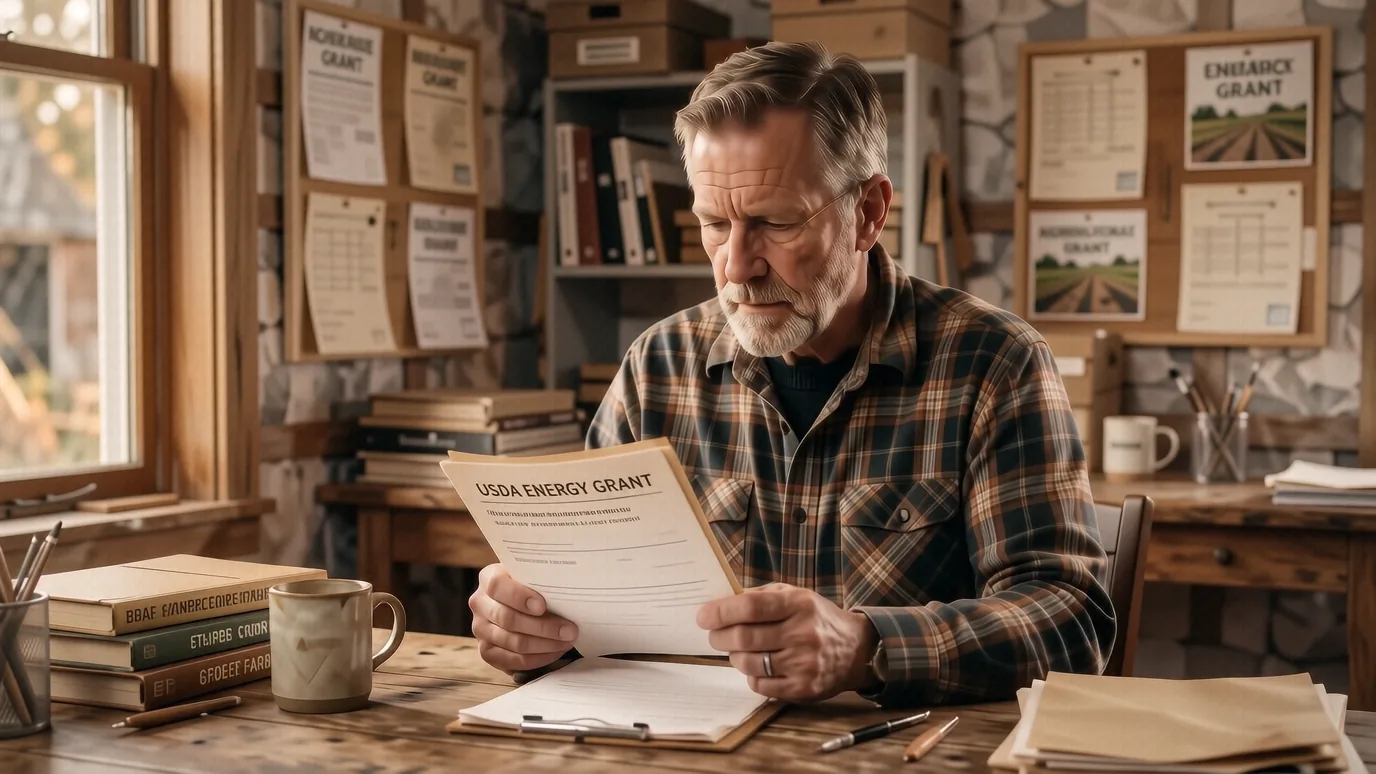
Funding Your Barn Upgrades Through the REAP Grant in Georgia
Leaking air destroys poultry house profitability. When heat escapes through unsealed wall cavities or gaps in the building envelope, your heaters work harder to maintain bird comfort. This wasted energy directly eats into your margins every single month. The USDA Rural Energy for America Program (REAP) provides a way to offset these upgrade costs.
Georgia farmers can access significant capital through this federal program. It targets small businesses and agricultural producers who want to improve energy efficiency or install renewable energy systems. Because the grant covers a portion of project costs, it makes high-performance insulation more accessible for large-scale operations.
Understanding REAP Grant Georgia Requirements
The USDA manages REAP to support rural economic development. To qualify in Georgia, your operation must be located in a designated rural area. Most agricultural production sites meet this criteria easily. You also need to demonstrate that the project will result in measurable energy savings.
Eligibility depends on your business structure. Individual farmers and family-owned operations are eligible for these funds. The grant can cover up to 50% of total eligible project costs. This cost-share model is designed to reduce the initial financial burden of upgrading older facilities.
Georgia producers often use REAP for insulation projects. Using AireBarrier Black/White helps meet the energy savings requirements because it seals air leaks that traditional fiberglass cannot stop. If you can prove your project reduces energy consumption, you have a much stronger application.
Application Windows and Timing in Georgia
Timing is everything with federal grants. The USDA operates on specific application windows throughout the year. In Georgia, you must hit these deadlines to be considered for funding cycles. Missing a window means waiting several months for the next opportunity.
The standard application windows close on March 31, June 30, and September 30. You should begin your preparation at least three months before these dates. A rushed application often leads to technical errors that cause immediate rejection.
Plan your project early. If you want to install Soy Bio Sealant this spring, you need your energy audit finished by February. This allows you to submit a complete package before the March 31 deadline.
Typical Project Scopes That Win Funding
The USDA prefers projects with clear, quantifiable data. A vague request for “better insulation” will likely fail during the review process. You must present a specific scope of work that includes technical specifications and projected savings.
Sealing the building envelope is a winning strategy. Many Georgia integrators focus on broiler barns where air infiltration is highest. An Auburn University study validated that sealing these barns with AireBarrier can result in 25-40% energy savings. These numbers provide the hard evidence reviewers look for.
High-density applications also perform well in audits. Our Ag-Tite chemistry achieves a density of approximately 1.5 lb/ft³, which is twice that of many competing polyurethane products. This density ensures the seal remains intact under the pressure changes common in large poultry houses.
The Role of Energy Audits
You cannot skip the energy audit. An auditor must verify your current energy use and predict how your project will change it. This document serves as the foundation for your entire REAP application.
The audit should be performed by a qualified professional. They will look at heating systems, ventilation, and building envelope integrity. Without this baseline data, the USDA cannot approve your cost-share request.
Step-by-Step Application Process
Applying for a REAP grant requires discipline. You are essentially presenting a business case to the federal government. Follow these steps to keep your application on track.
First, secure an energy audit. This step identifies exactly where your facility is losing money. It also tells you which specific areas require sealing or insulation to meet USDA standards.
Second, gather your financial documents. The USDA will review your business’s ability to fund the remaining 50% of the project. You need tax returns and proof of agricultural production to establish eligibility.
Third, obtain formal quotes from contractors. These quotes must be detailed and specific to the materials being used. If you are using specialized equipment like a SprayPod 2.0, ensure the contractor includes all labor and material costs in their bid.
Fourth, submit the application through the official USDA portal. Double-check every field for accuracy before hitting submit. Small typos in your tax ID or address can stall an application for weeks.
Stacking REAP with Other Programs
You do not have to rely on a single source of funding. Many Georgia producers “stack” REAP with other federal or state programs to cover more of their costs. This strategy maximizes the total amount of capital available for facility upgrades.
The Environmental Quality Incentives Program (EQIP) is a common partner. Managed by the NRCS, EQIP helps farmers implement conservation practices. While REAP focuses on energy, EQIP often covers aspects related to resource management and environmental health.
State-level programs in Georgia can also provide additional support. Always consult with your local USDA Service Center to see if multiple funding streams apply to your specific project. Combining these funds can sometimes cover nearly the entire cost of a major renovation.
Technical Specifications for Success
The USDA looks for materials that meet strict safety and performance standards. Using unrated products is a fast way to lose your funding. You must provide documentation proving your insulation meets national codes.
Ag-Tite products are designed for these rigorous environments. For example, our sealant is the only agricultural sealant tested to pass the ASTM E-84 fire test. This certification provides the technical proof required during the grant review process.
Documentation matters most. Keep all technical data sheets and test results organized in a single folder. When the USDA reviewer asks for proof of performance, you should be able to provide it instantly.
Common Pitfalls to Avoid
Many applicants fail because they underestimate the complexity of the paperwork. It is not just about filling out forms. You are proving that your investment will result in a permanent reduction in energy consumption.
Do not wait until the last week of the window. The USDA systems often experience heavy traffic as deadlines approach. A technical glitch on June 29 can ruin a year of planning.
Avoid vague contractor estimates. If a quote simply says “insulation work - $10,000,” it will be rejected. The estimate must break down the square footage, the material type, and the specific application method used.
Maximizing Your Return on Investment
A grant is only useful if the project actually saves money. You should view the REAP grant as a tool to accelerate your ROI. By reducing energy bills by 25% or more, you pay back the remaining 50% of the project cost much faster.
Focus on high-impact areas first. Sealing cracks around doors, windows, and ventilation ports often yields higher savings than simply adding bulk insulation. Use the audit data to prioritize these critical leak points.
Long-term profitability depends on controlled environments. Whether you are managing poultry or swine, stable temperatures reduce stress on animals. This leads to better feed conversion ratios and improved overall production.
FAQ
How much money can I get from a REAP grant in Georgia?
The USDA typically provides a cost-share of up to 50% for eligible projects. The total award amount depends on the scale of your project and the specific energy savings you can demonstrate through an audit.
Can I use REAP funds for spray foam insulation?
Yes, if the insulation project is part of a documented plan to increase energy efficiency. You must provide an energy audit that proves the spray foam will result in measurable energy savings for your agricultural operation.
What are the main application deadlines?
In Georgia, the USDA REAP application windows generally close on March 31, June 30, and September 30. It is highly recommended to submit your materials well before these dates to avoid technical issues.
Do I need an energy audit for a REAP grant?
An energy audit is mandatory. The USDA requires professional verification of your current energy usage and a projection of how the proposed project will reduce that consumption.
Is my small farm eligible for this program?
Most agricultural producers in rural Georgia are eligible. As long as your operation is located in a designated rural area and meets the business eligibility requirements, you can apply for funding.