Is Spray Foam Safe for Chickens? — A Direct Answer
Spray foam is not inherently safe for chickens if it remains uncured or off-gasses volatile organic compounds (VOCs) into the barn environment.
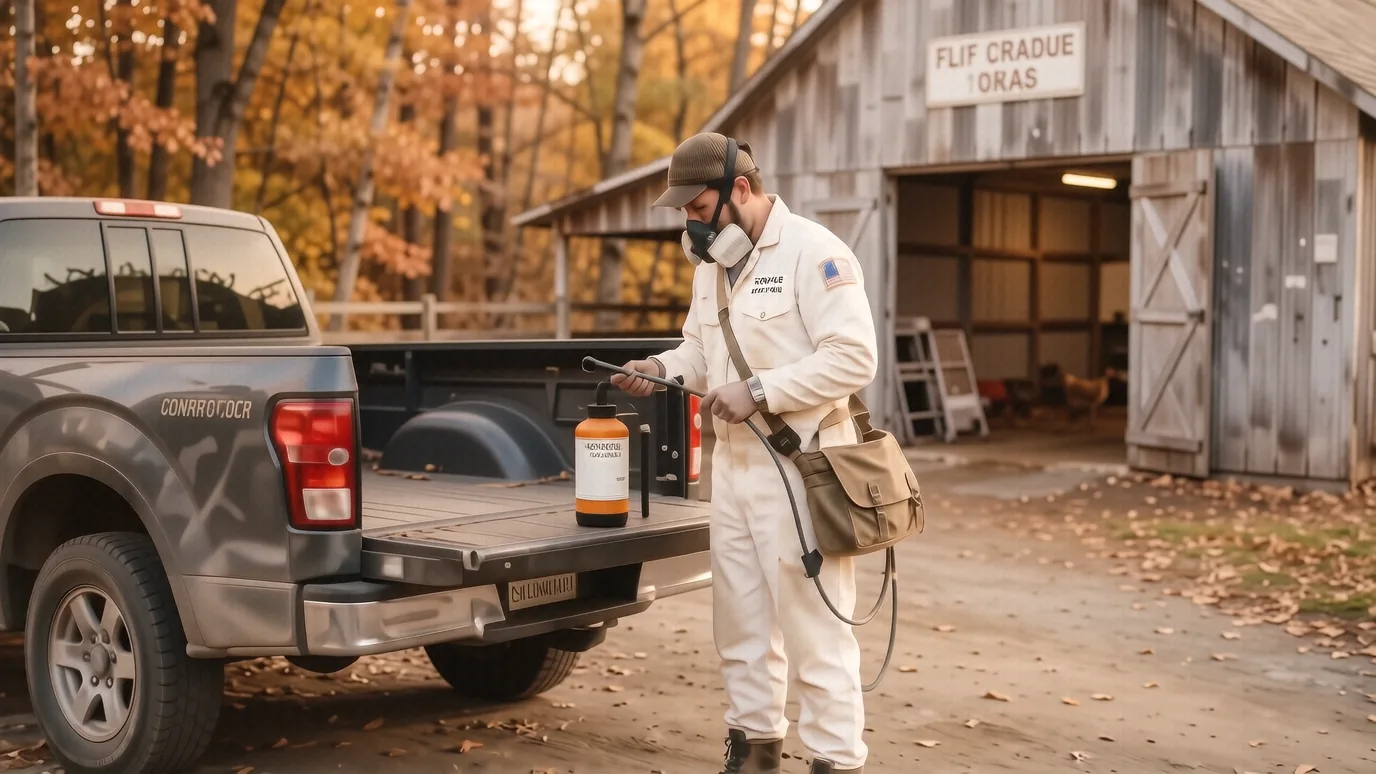
The Short Answer
Spray foam is not inherently safe for chickens if it remains uncured or off-gasses volatile organic compounds (VOCs) into the barn environment. Most standard polyurethane products release chemicals during the application process that can harm avian respiratory systems. You must ensure any sealant used reaches a full cure before introducing birds to the structure.
Birds have highly sensitive lungs. They breathe much faster than humans do. If your insulation is still off-gassing, your flock will suffer.
Why Poultry Producers Ask This Question
Integrators and small-scale farmers often face a difficult choice between thermal efficiency and bird health. Traditional fiberglass insulation often fails to stop air infiltration, which leads to massive energy losses. Many producers look toward spray foam because it fills every gap in the building envelope. However, the chemical composition of standard closed-cell polyurethane creates legitimate concerns for biosecurity and respiratory wellness.
The fear is real. One bad batch of chemicals can ruin a flock.
When you apply standard spray foam, a chemical reaction occurs that produces heat and gas. If those gases linger in the dead air space of a broiler barn, they settle into the litter. This creates a toxic environment for the birds. You need a product designed specifically for agricultural environments where air quality is a matter of life and death.
The Risks of Standard Polyurethane
Standard spray foam often lacks the density required for heavy-duty agricultural use. Auburn University testing showed that Ag-Tite products reach a density of ~1.5 lb/ft³, which is twice the density of many competing polyurethane products. Low-density foams can be more porous and may trap moisture or allow chemical migration over time.
Chemical off-gassing is the primary danger. Many consumer-grade foams use blowing agents that stay active in the air for days after application. Because chickens have a unique respiratory system involving air sacs, they absorb these airborne toxins much faster than mammals.
Moisture management also matters. If a foam fails to create a true vapor barrier, condensation forms behind the insulation. This dampness encourages mold growth. Mold is just as dangerous to poultry health as chemical fumes.
Testing for Safety and Compliance
You should never guess when it comes to building materials in a production facility. In 2005, a University of Georgia newsletter detailed how darkling beetle penetration tests can reveal gaps in barn sealing. If a sealant cannot stop a tiny beetle, it likely isn’t providing the airtight seal required for energy efficiency.
Fire safety is another critical metric. Ag-Tite is the only agricultural sealant tested to meet ASTM E-84 standards. This test measures how much smoke and flame a material produces when exposed to fire. Using materials that pass these rigorous tests provides an extra layer of protection for your facility and your livestock.
Safety requires verification. Do not trust a salesperson’s word alone.
The Ag-Tite Difference: AireBarrier and Soy Bio Sealant
We developed our chemistry to solve the specific problems found in poultry houses. Our AireBarrier Black/White is designed to create a permanent air seal without the same level of toxic off-gassing seen in generic foams. It focuses on sealing the building envelope to prevent energy loss while maintaining a safe environment for the birds.
We also offer Soy Bio Sealant, which utilizes plant-based components. This reduces the chemical load within the barn. When you use our SprayPod 2.0 equipment, you are applying a product engineered for the specific thermal and biological needs of an agricultural setting.
The Auburn study proved it works. They found that broiler barns sealed with AireBarrier saw energy savings between 25% and 40%.
Practical Application Steps for Producers
If you are planning to insulate your barn, follow these steps to ensure bird safety. First, check the technical data sheet for VOC content and cure times. Second, ensure the application is done by professionals using calibrated equipment like a SprayPod. Third, allow for a mandatory ventilation period before the birds arrive.
Ventilation is non-negotiable. You must flush the building with fresh air for several days following any chemical application.
- Verify ASTM E-84 compliance.
- Confirm density meets agricultural standards (~1.5 lb/ft³).
- Calculate coverage needs (AireBarrier yields ~16 board-feet per gallon at 1″ thickness).
- Schedule application during a turnaround period between flocks.
Using the USDA REAP grant can help offset these costs. These grants offer up to 50% cost-share for energy efficiency improvements. Keep in mind that application windows typically fall on March 31, June 30, and September 30.
Summary of Material Selection
Choosing the right sealant is a long-term investment in your flock’s health. A single 24 oz can provides about 3,000 linear feet of a 1/4″ bead for small repairs. For larger projects, a 16 lb canister is equivalent to roughly 10 of those smaller cans.
Don’t settle for generic foam. Use products that have been tested in actual poultry environments.
FAQ
Is spray foam toxic to birds during application?
Yes, the application process releases gases and heat. You must never have birds in a building while spray foam is being applied or while it is still curing.
How long does it take for foam to stop off-gassing?
Cure times vary based on temperature, humidity, and the specific product used. Always follow the manufacturer’s instructions and perform thorough ventilation before introducing livestock.
Can I use spray foam to stop darkling beetles?
While spray foam is not a pesticide, it can help seal the cracks and crevices that beetles use to enter a barn. A tight air seal helps prevent pest penetration.
Does the density of the foam affect safety?
Higher density foams, such as our ~1.5 lb/ft³ tested product, are generally more stable and less likely to degrade or allow moisture migration compared to low-density alternatives.
How can I pay for barn insulation?
You may qualify for a USDA REAP grant, which provides up to 50% cost-share for energy-efficient upgrades. Check the official USDA windows in March, June, or September.