Spray Foam Curing Times by Temperature
Uncontrolled temperatures ruin insulation jobs. If the substrate is too cold or the air is too humid, your AireBarrier will not bond correctly.
Temperature Dictates Foam Performance
Uncontrolled temperatures ruin insulation jobs. If the substrate is too cold or the air is too humid, your AireBarrier will not bond correctly. You might think a little extra product fixes a bad cure, but chemical reactions do not work that way.
Temperature changes everything.
When you spray in extreme conditions, you risk creating voids or “off-gassing” issues that compromise the entire building envelope. An Auburn University study showed 25-40% energy savings on broiler barns sealed with AireBarrier because the seal was airtight and uniform. If your curing process fails due to poor temperature management, those efficiency numbers vanish immediately.
The Science of the Chemical Reaction
Spray foam is a chemical reaction, not just a liquid that dries. Most agricultural sealants rely on an exothermic reaction where heat is generated internally as the two components mix. This internal heat helps drive the cure even when the ambient air is chilly.
Heat drives the cure.
If the ambient temperature drops below the manufacturer’s specified range, the reaction slows down or stops entirely. You may see a “tacky” surface that never hardens, which leads to structural instability in your insulation layer. This is why checking your thermometer before pulling the trigger on the SprayPod 2.0 is mandatory for every professional.
OSHA and Safety Standards for Curing Environments
Safety comes first. You cannot ignore the vapor and gases released during the initial curing phase of any spray foam application. OSHA regulations require specific ventilation protocols to protect workers from inhaling Isocyanates or other volatile organic compounds (VOCs).
Ventilation is non-negotiable.
Even if the temperature is perfect for a fast cure, you must maintain airflow to prevent gas buildup in confined spaces like poultry houses or grain bins. The EPA also monitors emissions related to chemical applications in agricultural settings. If you are working in a closed barn, you need to monitor the air quality continuously until the product has reached its full cure state.
PPE requirements change with the environment.
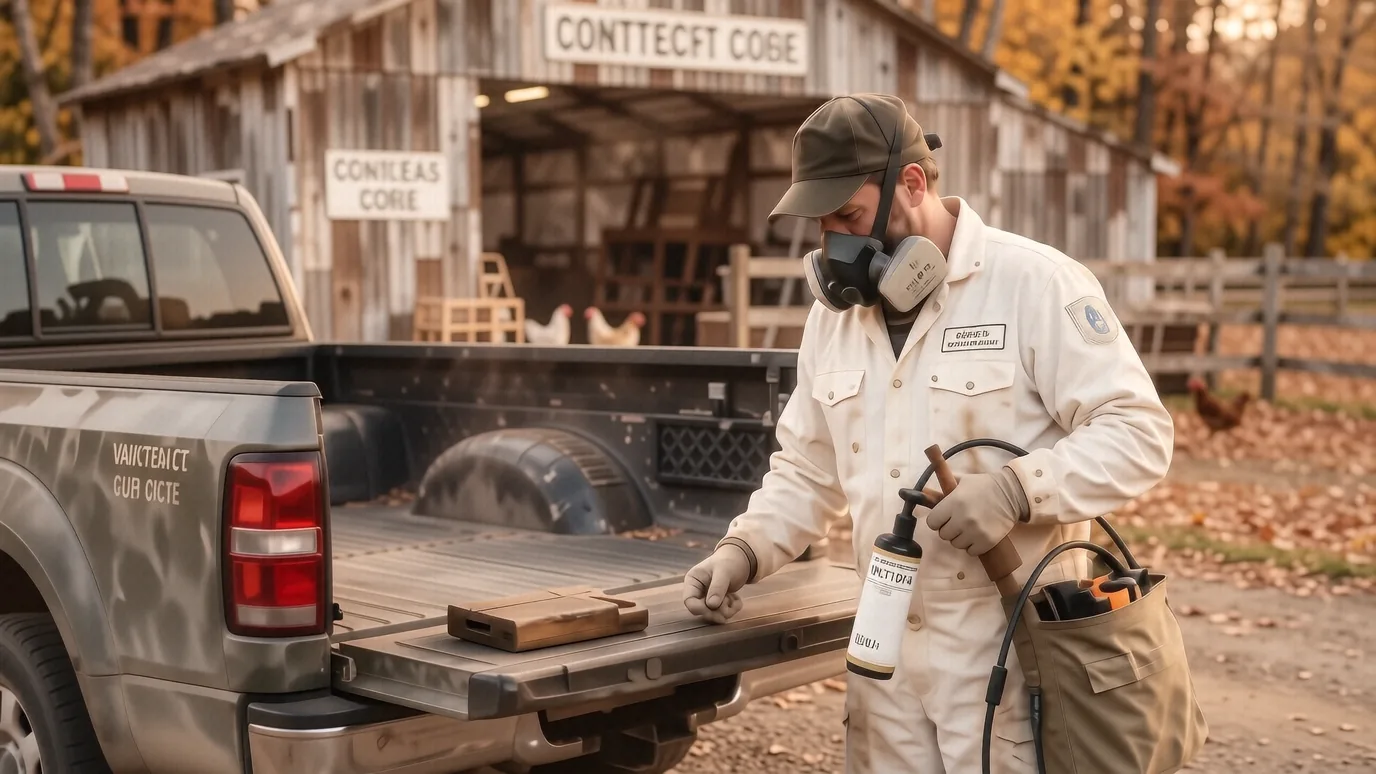
In high-heat scenarios, heat exhaustion becomes a primary risk alongside chemical exposure. You must wear a supplied-air respirator (SAR) or an appropriate organic vapor cartridge mask depending on your specific SDS requirements. Always check the Safety Data Sheet for your specific batch of Soy Bio Sealant before starting work in high-temperature zones.
Curing Time at Low Temperatures (30°F to 50°F)
Cold weather is the enemy of fast production. When temperatures hover near freezing, the chemical reaction struggles to generate enough internal heat to complete the polymerization process. This can extend your spray foam curing time from minutes to several hours or even days.
Watch for frost.
If there is any moisture or frost on the substrate, the foam will fail to bond. A layer of ice acts as a physical barrier between the sealant and the building material. You should use infrared thermometers to ensure the surface temperature meets the minimum requirements before you begin spraying.
Density matters in the cold.
Our Auburn-tested density of ~1.5 lb/ft³ is designed to remain stable, but extreme cold can cause cells to collapse if they don’t cure fast enough. If the foam stays soft for too long, it may settle or shrink as it eventually hardens. This creates gaps that allow darkling beetles or drafts to penetrate your facility.
Managing High Heat and Humidity (85°F+)
Heat speeds things up. While faster curing sounds efficient, high temperatures can cause the foam to “flash” or expand too violently before it can stabilize. This results in a coarse, brittle texture that lacks the structural integrity needed for long-term agricultural use.
Humidity is a silent killer.
High moisture levels in the air can react with Isocyanates to create carbon dioxide bubbles within the foam. These bubbles look like tiny holes or “pinholes” in your finished seal. A U Georgia Nov 2005 newsletter highlighted how even small penetrations could allow pests like darkling beetles to enter a barn.
Keep it controlled.
If you are working in high humidity, you may need to adjust your spray pattern or application thickness. Avoid applying heavy coats all at once in the heat. Instead, use thinner passes to manage the exothermic heat release and ensure a uniform density throughout the layer.
Post-Application Protocols
Never rush the inspection. Just because the foam feels hard to the touch does not mean it is fully cured or chemically stable. You must wait for the off-gassing period to conclude before allowing livestock or workers back into the immediate area.
Verify your work.
Check for voids using a high-lumen flashlight. If you see areas that look “spongy,” those sections have likely failed due to temperature fluctuations during the application. These spots must be scraped out and reapplied once the ambient conditions are stabilized.
Document everything.
Keep a log of the ambient temperature, substrate temperature, and humidity levels for every job site. This documentation is vital if you are applying for a USDA REAP grant. Since these grants can cover up to 50% of costs, having proof of professional application and adherence to thermal standards is essential for your paperwork.
Certification and Professional Standards
Don’t wing it. Agricultural insulation requires more than just a spray rig; it requires an understanding of material science and local building codes. Many integrators now require contractors to hold specific certifications regarding chemical handling and thermal envelope integrity.
Training pays off.
Using equipment like the SprayPod 2.0 ensures you have the mechanical consistency required for professional results. However, the operator must understand how a 10-degree shift in temperature changes the viscosity of the material.
Always follow the ASTM E-84 fire test standards. Ag-Tite is the only agricultural sealant tested to meet this standard, which means your curing process directly impacts the fire rating of the finished structure. A poorly cured foam may not meet the flame spread requirements intended by the manufacturer.
FAQ
How long does spray foam take to cure in 40°F weather?
Curing times increase significantly in cold temperatures. While a standard cure might take minutes, at 40°F, you may need to wait several hours before the material is structurally stable or safe for contact. Always refer to your specific product’s SDS for exact timelines.
Can I spray foam if there is condensation on the walls?
No. You should never apply sealant to a wet or condensing surface. Moisture interferes with the chemical bond and can cause the foam to delaminate from the substrate, leading to total application failure.
Does humidity affect the density of the foam?
Yes, high humidity can lead to gas bubbles forming within the cells during the exothermic reaction. This reduces the overall density and can create a porous structure that fails to provide an airtight seal.
What is the best way to check if the foam is fully cured?
A physical touch test is only a starting point. For professional applications, you should monitor ambient air quality for off-gassing and use specialized tools to ensure the material has reached its intended density and hardness.
Are there specific PPE requirements for high-temperature spraying?
In addition to respiratory protection, workers in high-heat environments must manage heat stress. This includes frequent hydration breaks and monitoring for signs of heat exhaustion while wearing full protective suits.