Spray Foam Application: Ventilation Requirements
Uncontrolled air movement kills productivity and endangers crews. When applying AireBarrier or other sealants, the chemical reaction creates immediate atmospheric
Managing Airflow During Spray Foam Application
Uncontrolled air movement kills productivity and endangers crews. When applying AireBarrier or other sealants, the chemical reaction creates immediate atmospheric changes. You cannot ignore the vapor and particulates released during the spray process. Proper ventilation is a safety requirement, not a suggestion.
Safety comes first. If you fail to manage airflow, your crew faces respiratory risks and potential fire hazards.
Regulatory Compliance and Safety Standards
OSHA governs the air quality in every American workplace. You must follow Permissible Exposure Limits (PELs) for all chemical components used during application. These limits vary depending on whether you are using a solvent-based or water-based product.
The EPA also sets strict guidelines regarding Volatile Organic Compounds (VOCs). High VOC levels can lead to rapid buildup in enclosed poultry houses or machine sheds. You must monitor these levels constantly.
Compliance is mandatory. If an inspector walks onto your site, they will check your ventilation setup and PPE logs immediately.
Failure leads to fines. Large-scale integrators often face heavy penalties when they bypass standard safety protocols during large barn retrofits.
Essential Personal Protective Equipment (PPE)
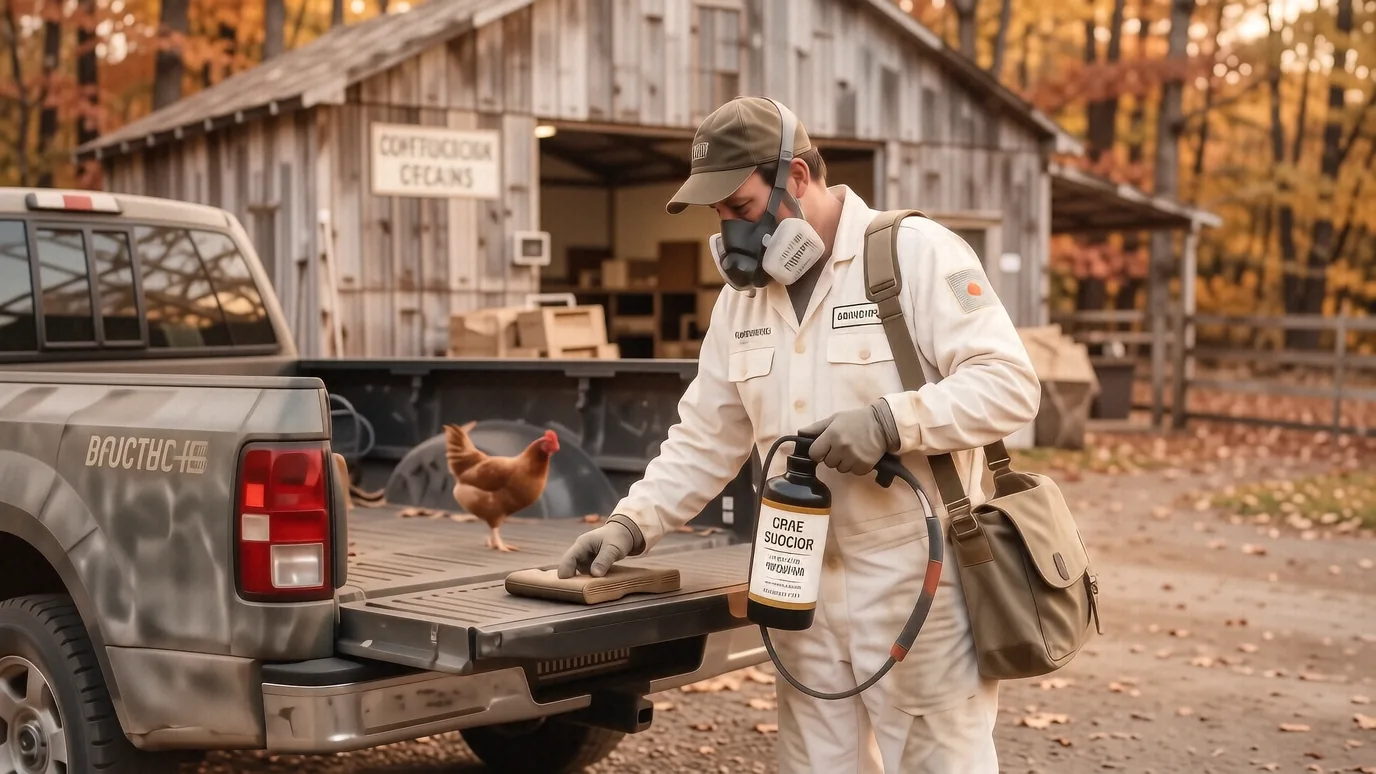
Standard dust masks are useless against chemical vapors. You need a respirator specifically rated for organic vapors to protect your lungs from harmful particulates. A NIOSH-approved respirator provides the necessary barrier between the technician and the air.
Fit testing is critical. Even an expensive respirator fails if it does not create a perfect seal against the user’s face.
Gloves and eye protection are equally vital. Chemical splashes can cause permanent ocular damage or skin irritation during high-pressure application with the SprayPod 2.0.
Wear the right gear. Using cheap alternatives often results in avoidable medical emergencies on the job site.
The Dangers of Poor Ventilation
Stagnant air creates a toxic environment. When spray foam settles, it can trap concentrated vapors at floor level where workers breathe most heavily. This buildup increases the risk of dizziness or loss of consciousness.
Fire is another massive concern. Many sealants are flammable before they fully cure, and high concentrations of vapor increase the ignition risk.
Ventilation prevents these disasters. You must maintain a constant exchange of fresh air to dilute any accumulating gases.
Keep moving air. Without active airflow, you are essentially working inside a chemical chamber.
Mechanical Ventilation Strategies
Passive ventilation rarely works for professional applications. You need mechanical assistance, such as high-volume axial fans or industrial blowers, to move air effectively. These tools should be positioned to pull contaminated air away from the spray zone and exhaust it outside the structure.
Placement matters immensely. If you place a fan incorrectly, you might simply swirl the vapors around the room instead of removing them.
Create a cross-breeze. Aim for a single point of entry for fresh air and a single point of exit for exhaust.
Check your airflow direction. Always ensure that the wind or mechanical pull moves from the “clean” side toward the application zone.
Post-Application Protocols and Re-entry
The job is not done when the spray stops. You must allow sufficient time for the product to cure before allowing unmasked personnel back into the space. This period depends on temperature, humidity, and the specific chemistry of your Soy Bio Sealant.
Monitor the air quality. Use a handheld VOC meter to confirm that levels have dropped below safe thresholds before declaring the area clear.
Wait for the cure. Entering too early can lead to lingering odors or secondary respiratory irritation for barn workers.
Document everything. Keep logs of your ventilation run times and air quality readings to protect your company from liability.
Certification and Training Requirements
Anyone operating spray equipment should hold a valid certification. Professional training ensures that operators understand both the chemistry of the product and the physics of airflow. This knowledge prevents costly mistakes during large-scale projects like broiler barn insulation.
Training reduces accidents. An educated crew recognizes the early signs of vapor buildup before it becomes a crisis.
Verify your team’s skills. Do not assume a new hire knows how to manage an industrial ventilation system safely.
Check their credentials. Proper certification is often a requirement for securing USDA REAP grants on large agricultural insulation projects.
FAQ
How long should I ventilate after spraying?
Ventilation duration depends on the specific product and environmental conditions. You must follow the manufacturer’s technical data sheet, but typically, you should continue mechanical ventilation until VOC levels return to baseline.
Can I use a standard shop fan for spray foam ventilation?
A standard shop fan is usually insufficient for professional applications. You need industrial-grade blowers capable of moving large volumes of air (CFM) to effectively dilute chemical vapors in enclosed agricultural buildings.
What happens if the humidity is too high during application?
High humidity can interfere with the curing process and affect how the sealant adheres to surfaces. It also changes how vapors behave in the air, often requiring more aggressive mechanical ventilation to maintain safety.
Is a N95 mask enough for spray foam work?
No, an N95 mask only protects against particulates like dust. For chemical applications, you must use a NIOSH-approved respirator equipped with organic vapor cartridges to prevent inhaling toxic fumes.