Darkling Beetles Have A Hard Time Penetrating Into The Ag-Tite Sealant
Darkling beetles destroy building materials. They find small cracks and hollow spaces within insulation to hide, breed, and eat.
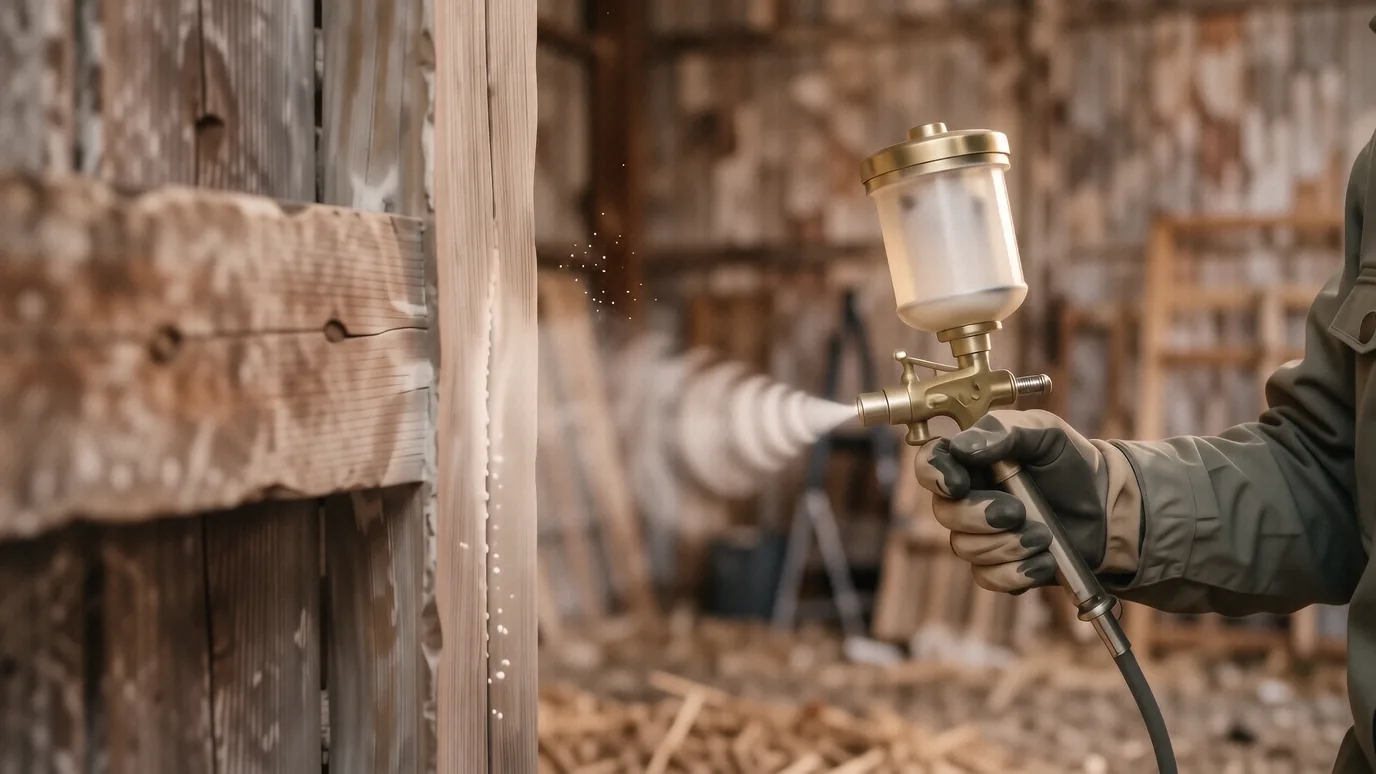
The Darkling Beetle Challenge in Poultry Facilities
Darkling beetles destroy building materials. They find small cracks and hollow spaces within insulation to hide, breed, and eat. Once a colony establishes itself inside your wall cavity, the damage spreads rapidly through the structure. Controlling these pests requires more than just standard cleaning protocols. It requires a physical barrier that denies them entry in the first place.
Standard spray foams often fail this test. These products frequently leave behind porous surfaces or deep crevices that act as perfect nesting sites for beetles. If a beetle penetrates the outer skin of a typical foam, it can hollow out the material from the inside. This creates a cycle of destruction that is difficult to stop once it begins.
Ag-Tite provides a different approach. We design our high-density polyurethane sealants to create a surface that beetles simply cannot exploit.
Lessons from the University of Georgia
In November 2005, the University of Georgia released a newsletter specifically addressing darkling beetle penetration. This research remains a cornerstone for how we develop our AireBarrier Black and White formulations. The study highlighted how pests exploit structural gaps to compromise bio-security.
Beetles are persistent. They will find any weakness in your building envelope if you allow them to exist. Most agricultural materials eventually succumb to biological deterioration because they lack a sufficiently hard exterior.
Ag-Tite changes the math. Our sealant forms a hard, flex shell that resists the mechanical digging behavior of these insects. By sealing joints and wall penetrations with a high-density material, you remove the “harboring” potential that leads to massive infestations.
Why Density Matters for Pest Resistance
Density is the most important metric in this fight. Most competing polyurethane products have much lower densities than our specialized sealants. Ag-Tite maintains an Auburn-tested density of approximately 1.5 lb/ft³. This makes the material significantly harder and more resistant to physical breakdown.
Hardness prevents burrowing. A beetle needs a soft, porous medium to create a home. When we apply our sealant using the SprayPod 2.0 system, we ensure a smooth, slick finish. This surface lacks the creases or deep joints that beetles use to begin their digging process.
The shell is vital. If the beetle cannot find a grip or a crevice, it cannot start the excavation process. Once they get past the initial shell of a standard foam, there is very little a farmer can do to stop them from eating until the material is gone.
Strategic Application in Broiler Barns
We do not suggest coating every square inch of a building with sealant. That would be inefficient and unnecessary for your bottom line. Instead, we focus on high-risk zones where beetles and birds interact most frequently. In broiler barns, this typically means the lower sections of the walls near the litter.
Litter is a breeding ground. We apply Ag-Tite near the floor to create a durable flex seal. This specific placement protects the building from two directions: beetle penetration from the floor up, and bird pecking from the inside out.
Birds are aggressive. They will peck at any soft material they find in their environment. Because our sealant is designed to be high-density and tough, it survives the constant physical contact of a growing flock. This dual-purpose protection makes your facility more resilient over the long term.
Choosing Between Black and White Sealants
Color choice affects more than just aesthetics. We offer both AireBarrier Black and AireBarrier White to meet specific environmental needs. In some poultry environments, the color of the sealant can help manage light or heat absorption near critical joints.
Light management matters. Using the correct color allows you to customize your air barrier system for the specific lighting requirements of your birds. Both colors provide the same high-density protection against pests and moisture.
Moisture is another enemy. Because Ag-Tite acts as a true air barrier, it stops the movement of moist air through your walls. This keeps the interior of your insulation dry, which further discourages pest activity and prevents mold growth.
Maximizing Your ROI with USDA REAP Grants
Upgrading your facility’s insulation and sealing is a significant investment. However, you do not have to shoulder the entire cost alone. The USDA REAP grant program offers substantial support for energy-efficient agricultural improvements.
Grants are powerful. You may be eligible for up to 50% cost-share through these federal programs. We recommend checking the application windows, which typically fall on March 31, June 30, and September 30.
Planning ahead saves money. Use our REAP grant estimator to see how much of your project could be covered by federal funds. Combining high-density sealing with government incentives is the most effective way to modernize your poultry house.
Comparing Foam and Sealant Technologies
Farmers often ask about the difference between traditional spray foam and our sealant technology. The primary distinction lies in the surface structure and density. Traditional foams are designed for volume, while Ag-Tite is designed for barrier integrity.
Foam is porous. While it provides R-value, it often leaves “paths” that insects can follow. Our foam vs. sealant comparison guide explains why a high-density air barrier is necessary to complement or replace traditional insulation in critical areas.
Sealant is solid. We focus on creating a continuous, non-porous skin. This skin stops the air, stops the moisture, and—most importantly—stops the beetles.
FAQ
How does Ag-Tite stop darkling beetles?
Ag-Tite creates a high-density (approx. 1.5 lb/ft³) hard shell with a smooth, slick surface. This prevents beetles from finding the crevices or soft material they need to burrow and nest.
Can beetles eat through the sealant once it is applied?
If the application is correct and the surface remains intact, beetles cannot penetrate the hard shell. The danger occurs when standard, low-density foams are used, which allow beetles to hollow out the material from the inside.
Is Ag-Tite safe for use in poultry houses?
Yes. We specifically design our polyurethane sealants for agricultural environments, including areas near bird litter and high-traffic zones where birds may peck at the walls.
How much can I save on energy costs by sealing my barn?
An Auburn University study validated that sealing broiler barns with AireBarrier can result in 25% to 40% energy savings. Actual savings depend on your specific building’s condition and local climate.
Are there grants available to help pay for this?
The USDA REAP grant program can provide up to 50% cost-share for energy efficiency improvements. You should monitor the March, June, and September application windows to apply.
Calculate your potential savings with our ROI Calculator.